Diamond Jewelry Explained: Jewelry Types, Diamond Cuts, Settings, Designs, Certification and Luxury Jewelry Trends
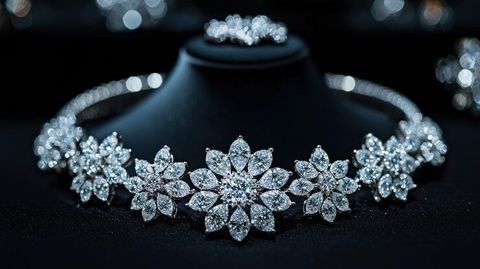
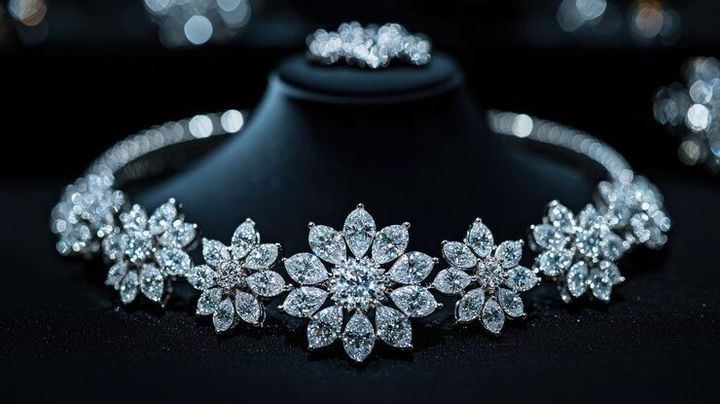
Diamond jewelry combines diamonds with precious metals to create rings, necklaces, earrings, bracelets, pendants, and other decorative pieces. Diamonds are valued for their hardness, optical properties, and distinctive appearance. They have long been used in personal adornment, ceremonial traditions, and significant life events across many cultures.
Diamond jewelry manufacturing involves several stages, including diamond selection, cutting, polishing, setting, and final inspection. The finished appearance depends on the diamond's shape, proportions, clarity, color, and the design of the jewelry itself. Gold, platinum, and other precious metals are commonly used to create settings that hold diamonds securely.
The diamond jewelry industry includes natural diamonds formed underground over geological periods and laboratory-grown diamonds produced using controlled technological processes. Both consist of crystalline carbon, although their origins differ. Specialized gemological testing can distinguish between them.
Common types of diamond jewelry
Diamond jewelry is available in numerous forms, each designed for different occasions and preferences.
Diamond rings: Include engagement rings, wedding bands, anniversary rings, and decorative rings.
Diamond necklaces: Range from delicate chains with diamond pendants to elaborate diamond necklaces.
Diamond earrings: Include studs, hoops, drop earrings, and chandelier designs.
Diamond bracelets: Include tennis bracelets, bangles, and designs featuring individual diamond settings.
Diamond pendants: Feature a central diamond or a decorative arrangement suspended from a chain.
Diamond jewelry sets: Combine coordinated pieces, such as earrings, necklaces, and bracelets.
The design, metal, diamond arrangement, and intended use influence the appearance and construction of each piece. Everyday jewelry often emphasizes comfort and secure settings, while occasion jewelry may feature more elaborate designs.
Importance
Understanding diamond jewelry helps consumers interpret product descriptions, compare designs, and understand the characteristics that influence appearance and durability. A diamond's visual appeal is not determined by size alone. Its proportions, light performance, setting, and surrounding metal can significantly affect how it looks when worn.
Diamond jewelry also has cultural and personal significance. Engagement rings, wedding jewelry, anniversary gifts, and inherited pieces may represent family traditions or important milestones. In addition, the industry supports activities involving gemology, jewelry design, metalworking, diamond processing, and retail distribution.
Understanding diamond cuts and shapes
Diamond shape describes the outline of a polished stone, while cut quality refers to the proportions, symmetry, and finishing that influence how a diamond interacts with light. These terms are related but do not mean the same thing.
Common diamond shapes include:
Round brilliant: A circular shape designed to produce strong brightness and sparkle.
Princess: A square or rectangular shape with pointed corners and a modern appearance.
Oval: An elongated shape that can create a visually extended appearance on the finger.
Emerald: A rectangular shape with step-cut facets and a broad, open-looking surface.
Pear: A teardrop-shaped design combining a rounded end with a pointed tip.
Cushion: A square or rectangular shape with rounded corners and a soft outline.
Marquise: An elongated shape with pointed ends.
Radiant: A square or rectangular shape with brilliant-style faceting.
The choice of shape affects the overall style of the jewelry. Round brilliant diamonds are commonly used in engagement rings, while emerald and oval shapes are often selected for their distinctive outlines.
The 4Cs of diamond quality
The 4Cs—cut, color, clarity, and carat weight—provide a widely recognized framework for describing diamond characteristics.
Characteristic | Meaning | What to understand |
|---|---|---|
Cut | Proportions, symmetry, and finish | Influences brightness and light performance |
Color | Degree of color in a diamond | Color grades help describe differences between stones |
Clarity | Presence of internal inclusions and external blemishes | Magnitude, location, and visibility affect evaluation |
Carat | Unit of diamond weight | One carat equals 200 milligrams |
Carat weight does not directly measure a diamond's visible diameter. Two diamonds with the same weight may look different because of their shapes, proportions, and settings. Similarly, clarity characteristics may be difficult to see without magnification, depending on their size and location.
Diamond settings and jewelry designs
A diamond setting holds the stone in place and influences its appearance, protection, and maintenance requirements.
Common settings include:
Prong setting: Uses small metal claws to hold the diamond while allowing light to enter from multiple directions.
Bezel setting: Surrounds the diamond's edge with a metal rim, helping protect its perimeter.
Pavé setting: Places numerous small diamonds close together along a metal surface.
Halo setting: Arranges smaller diamonds around a central stone.
Channel setting: Positions diamonds within a metal channel, commonly used in bands and bracelets.
Three-stone setting: Features a central diamond accompanied by two additional stones.
Each design involves different construction considerations. Prong settings may allow more light exposure but require periodic checks for loose claws. Bezel settings provide greater edge coverage, while pavé designs may require careful inspection because they contain many small stones.
Recent Updates
Diamond jewelry trends continue to reflect changes in manufacturing technology, consumer preferences, digital shopping tools, and expectations regarding product transparency. Recent developments through 2024–2026 include greater attention to laboratory-grown diamonds, digital product documentation, distinctive diamond shapes, and the origins of precious materials.
Laboratory-grown diamonds and manufacturing technology
Laboratory-grown diamonds are produced using methods such as high-pressure, high-temperature (HPHT) growth and chemical vapor deposition (CVD). These methods create diamond crystals that can subsequently be cut and polished for jewelry applications.
Laboratory-grown diamonds have become a more visible part of the jewelry market. They have essentially the same fundamental chemical composition and crystal structure as natural diamonds, although trace elements and growth characteristics may differ. Their origin, however, is different, and appropriate disclosure helps consumers understand what they are examining.
Design and customization trends
Jewelry designs increasingly include combinations of traditional craftsmanship and digital design tools. Computer-aided design (CAD) allows designers to model a ring or necklace before production, while computer-aided manufacturing can help translate the design into physical components.
Current design interests include oval diamonds, vintage-inspired settings, geometric forms, colored gemstones paired with diamonds, and personalized jewelry. Preferences vary by region and occasion, so no single design represents the entire market.
Traceability and responsible sourcing
Digital records and product documentation can help record details about diamond characteristics, processing stages, and supply-chain movement. Some companies use digital identification systems or blockchain-based records to support traceability, although the reliability and scope of these records depend on the system and the information entered.
Consumers and industry participants also pay attention to responsible sourcing, labor conditions, and environmental impacts. These considerations can be complex because diamond production involves different mining locations, manufacturing methods, transportation routes, and supply-chain arrangements.
Laws or Policies
Diamond jewelry is affected by regulations covering consumer protection, product descriptions, hallmarking, import and export procedures, and the disclosure of diamond characteristics. Requirements differ between countries and may depend on whether the product contains natural diamonds, laboratory-grown diamonds, precious metals, or other gemstones.
Diamond jewelry regulations in India
In India, diamond jewelry may fall under several relevant regulatory frameworks.
The Bureau of Indian Standards (BIS) administers India's hallmarking framework for specified precious-metal articles. Gold jewelry hallmarking identifies the purity of the gold according to applicable requirements. Diamond grading and gold purity are separate matters, so a gold hallmark should not be interpreted as certification of a diamond's cut, clarity, or origin.
The Consumer Protection Act, 2019, provides a general framework for consumer rights and misleading commercial representations. Product descriptions should accurately represent the material, characteristics, and nature of the jewelry.
The Central Consumer Protection Authority has also issued guidelines concerning misleading advertisements and endorsements. Applicable requirements depend on the nature of the representation and the circumstances.
Diamond certification and disclosure
Gemological reports document assessed characteristics of a diamond. Recognized laboratories, including the Gemological Institute of America (GIA) and the International Gemological Institute (IGI), issue reports for eligible diamonds under their respective procedures.
A report may contain information about shape, measurements, carat weight, color, clarity, and other grading details. Some reports also identify whether a diamond is natural or laboratory-grown. The exact information depends on the report type and the laboratory's procedures.
A grading report is not the same as a guarantee of future market value. Report numbers and identifying details can be checked through the issuing laboratory's verification resources, where available. Consumers should also understand the distinction between a laboratory report, a retailer's description, and a precious-metal hallmark.
Tools and Resources
Several tools can help readers understand diamond characteristics, interpret grading reports, and learn about jewelry construction.
Diamond grading and identification resources
GIA: Provides educational material about diamond quality, grading terminology, and gem identification.
IGI: Provides diamond and gemstone grading information, along with report verification resources for eligible reports.
BIS: Publishes information about precious-metal hallmarking and applicable standards in India.
CAD jewelry design software: Helps designers create and examine digital models of rings, pendants, and other jewelry.
Diamond measurement and grading tools: Include microscopes, proportion-measuring instruments, and specialized lighting used in gemological assessment.
These resources have different purposes. Gemological laboratories assess diamond characteristics, while hallmarking authorities address precious-metal purity within their respective frameworks.
Understanding a diamond grading report
A grading report can contain several important details:
Identification: Report number and relevant diamond identifiers.
Measurements: Physical dimensions recorded by the laboratory.
Carat weight: The measured weight of the diamond.
Color and clarity: Grades assigned under the laboratory's grading system.
Cut information: Assessment details when applicable to the diamond type and report.
Additional characteristics: Features such as fluorescence or clarity diagrams, depending on the report.
A grading report helps describe a diamond, but it does not replace an examination of the finished jewelry. The mounting, craftsmanship, metal quality, and security of the setting are also relevant to the overall piece.
FAQs
What are the main types of diamond jewelry?
The main types include diamond rings, necklaces, earrings, bracelets, pendants, and coordinated jewelry sets. Designs vary according to the diamond shape, metal, setting, and intended occasion.
What are the 4Cs of diamond quality?
The 4Cs are cut, color, clarity, and carat weight. Together, they provide a framework for describing a diamond's physical characteristics and appearance.
What is the difference between natural and laboratory-grown diamonds?
Natural diamonds form through geological processes, while laboratory-grown diamonds are produced using controlled manufacturing methods. Both are crystalline carbon, but their origins differ and can be assessed using appropriate gemological techniques.
Why is diamond certification important?
A diamond grading report documents characteristics assessed by a gemological laboratory. It helps readers interpret a stone's specifications, although it does not automatically establish its market value or guarantee the quality of the entire jewelry piece.
Which diamond setting is commonly used for engagement rings?
Prong, bezel, halo, and three-stone settings are all used in engagement rings. The choice depends on the desired appearance, the diamond's shape, protection requirements, and personal preference.
Conclusion
Diamond jewelry combines gemstone characteristics, metalworking, design, and specialized craftsmanship. Understanding diamond shapes, the 4Cs, settings, and grading reports helps explain the differences between jewelry pieces. Laboratory-grown diamonds, digital design tools, and increased attention to traceability continue to influence the industry. Certification, accurate product descriptions, and applicable consumer-protection rules remain important elements of diamond jewelry education.