Factory Automation Explained: Automation Technologies, Robotics, Control Systems, Global Manufacturers, Suppliers and Industrial Applications
Factory automation has become a practical necessity for manufacturers who need higher output, consistent quality, and lower operating costs. By combining machines, sensors, software, and robots, plants can run with less manual intervention while improving safety and traceability.
This guide explains the core technologies, the role of robotics and control systems, the main global manufacturers and suppliers, and where these systems are used across industries.
What Factory Automation Actually Means
Factory automation refers to the use of technology to control and monitor production processes with minimal human input. It covers everything from simple sensor-driven conveyors to fully integrated lines that handle assembly, inspection, packaging, and material movement.
The goal is not to eliminate people but to free operators from repetitive or hazardous tasks so they can focus on supervision, quality, and continuous improvement. Modern systems also collect data that helps teams spot bottlenecks, predict maintenance needs, and adjust production in real time.
Key Automation Technologies
Several technologies form the foundation of most factory automation projects.
Robotics and Industrial Robots
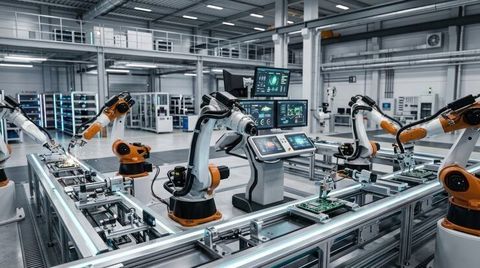
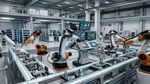
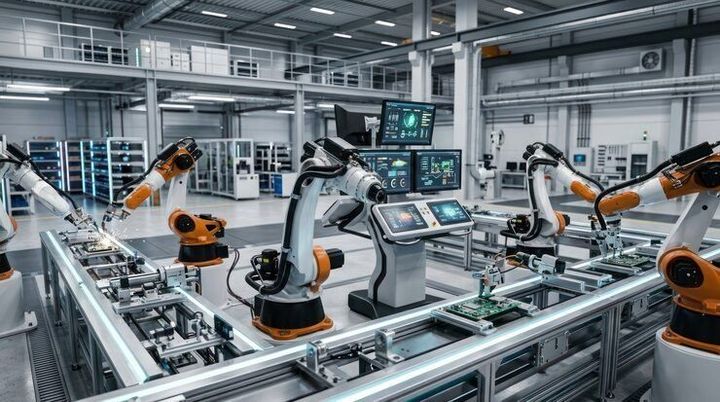
Industrial robots perform tasks that require speed, precision, or consistency. Traditional six-axis robots handle welding, painting, machine tending, and heavy lifting. Collaborative robots, often called cobots, work safely alongside people and are popular for lighter assembly, packing, and machine loading.
Other common types include SCARA robots for fast pick-and-place work, delta robots for high-speed packaging, and autonomous mobile robots (AMRs) that move materials around the factory floor without fixed tracks.
Control Systems: PLC and SCADA
A programmable logic controller (PLC) acts as the local brain of a machine or production cell. It reads sensors, runs logic, and controls motors, valves, and actuators in real time.
SCADA (Supervisory Control and Data Acquisition) systems sit above the PLCs. They give operators a central view of the entire process, display live data, manage alarms, and store historical records. Together, PLC and SCADA form the backbone of most industrial control systems.
Sensors, Vision, and Connectivity
Modern lines rely on sensors for position, pressure, temperature, and presence detection. Machine vision systems check quality, guide robots, and read barcodes or codes. Industrial networks and protocols such as EtherNet/IP, Profinet, and OPC UA allow machines from different vendors to share data reliably.
Leading Global Manufacturers and Suppliers
A relatively small group of companies supplies the majority of factory automation equipment worldwide.
Siemens, Rockwell Automation, Schneider Electric, and ABB provide comprehensive portfolios that include PLCs, drives, HMIs, SCADA software, and complete automation systems. Mitsubishi Electric, Omron, and Beckhoff are also strong in control hardware and software.
In robotics, FANUC, ABB, KUKA, Yaskawa, and Universal Robots lead in industrial and collaborative robots. Cognex and Keyence dominate machine vision. Many system integrators and regional suppliers combine these products into complete turnkey lines tailored to specific industries.
When choosing suppliers, manufacturers typically evaluate local service support, spare-parts availability, software compatibility, and long-term upgrade paths.
Industrial Applications Across Sectors
Factory automation appears in nearly every manufacturing environment.
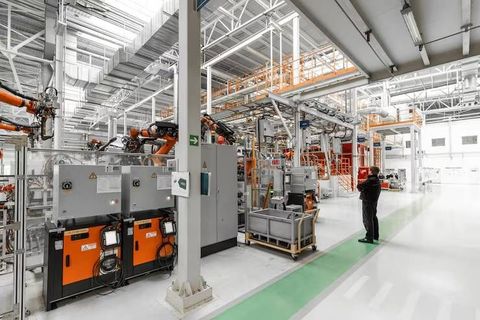
In automotive plants, robots weld body structures, apply paint, and assemble components with high precision. Electronics manufacturers use high-speed robots and vision systems for circuit board assembly and testing. Food and beverage facilities rely on hygienic automation for filling, packaging, and palletizing while meeting strict cleanliness standards.
Pharmaceutical and medical-device producers apply automation for accurate dosing, sterile handling, and full batch traceability. Warehouses and distribution centers deploy AMRs and automated storage systems to move goods efficiently. Even smaller job shops increasingly adopt collaborative robots for machine tending and repetitive tasks.
Practical Considerations When Implementing Factory Automation
Successful projects start with clear goals—higher throughput, better quality, reduced downtime, or improved safety. Teams then map existing processes, identify bottlenecks, and decide which tasks deliver the strongest return when automated.
Integration with existing PLCs, networks, and enterprise software is often more important than the individual machines. Training operators and maintenance staff ensures the system continues to perform after installation. Many companies begin with a single cell or line, prove the benefits, and expand step by step.
Cybersecurity and data ownership also matter as more equipment connects to plant networks and the cloud. Choosing vendors with strong security practices and clear data policies reduces future risk.
Looking Ahead
Factory automation continues to evolve toward greater flexibility and intelligence. Collaborative robots, easier programming interfaces, and better data analytics make automation accessible to smaller manufacturers. Predictive maintenance and digital twins help plants avoid unplanned stops.
Whether a company is upgrading an existing line or designing a new facility, understanding the core technologies—robotics, PLC and SCADA control systems, sensors, and industrial networks—provides a solid foundation for better decisions. The right combination of equipment, software, and supplier support can turn automation from a capital expense into a lasting competitive advantage.