Lyophilized Medicines Explained: Freeze-Drying Technologies, Pharmaceutical Manufacturing Processes, Formulations, Equipment, Global Manufacturers and Medical Applications
Lyophilized medicines are pharmaceutical products manufactured using a process called lyophilization, commonly known as freeze-drying. This technology removes water from a frozen pharmaceutical preparation through sublimation and controlled drying. The resulting product is generally a dry, porous material that can be reconstituted with an appropriate liquid before administration.
Freeze-drying technology developed from scientific research into preserving biological materials, vaccines, and other temperature-sensitive substances. Pharmaceutical manufacturers adopted the process because certain medicines are less stable when stored in liquid form. Removing water under controlled conditions can help maintain product stability and extend its usable storage period when supported by appropriate formulation and stability studies.
Today, lyophilized medicines are used in pharmaceutical manufacturing, biotechnology, vaccines, injectable formulations, and specialized medical applications.
Why Lyophilized Medicines Matter in Modern Healthcare
Many pharmaceutical products contain biological or chemical ingredients that may degrade when exposed to moisture, temperature changes, or prolonged storage conditions. Lyophilization addresses some of these stability challenges by reducing the water content of a pharmaceutical preparation.
This technology is particularly relevant for products that require controlled storage and reliable reconstitution before administration.
Major applications include:
Biopharmaceuticals: Certain proteins, peptides, and other biological products are formulated as freeze-dried preparations.
Vaccines: Selected vaccine formulations use lyophilization to support product stability.
Injectable Medicines: Some sterile injectable products are manufactured as dry powders for reconstitution.
Diagnostic Products: Certain laboratory reagents and diagnostic materials use freeze-drying for preservation.
Biotechnology Products: Specialized biological materials may require controlled dehydration to maintain their characteristics.
Research Applications: Freeze-dried materials are used in pharmaceutical development and laboratory research.
The technology supports pharmaceutical storage and handling requirements, although the stability of each product depends on its specific formulation and packaging.
Major Types of Lyophilized Pharmaceutical Formulations
Lyophilized medicines are available in different formulations depending on the active ingredient, intended administration route, and manufacturing requirements.
Lyophilized Injectable Formulations
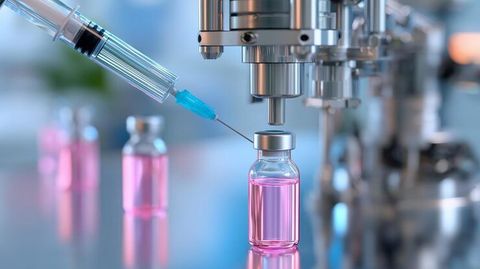
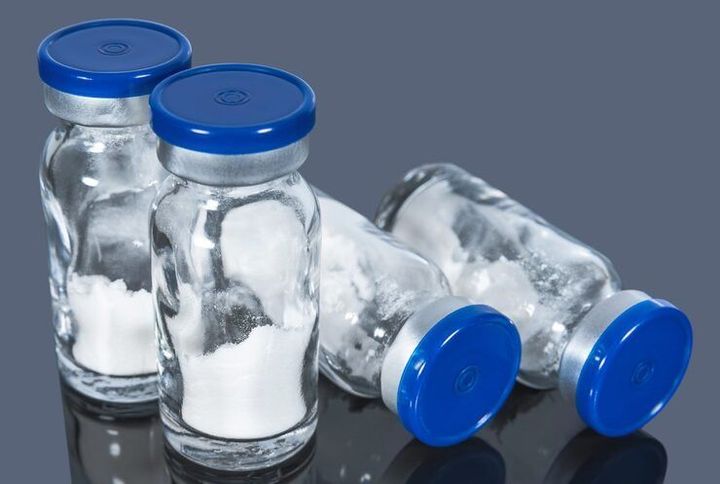
Lyophilized injectables are sterile pharmaceutical products supplied as dry powders or cakes in sealed containers, commonly glass vials.
Before administration, the product is reconstituted using a specified sterile diluent according to its approved instructions.
These formulations are used for selected antibiotics, biological medicines, and other injectable pharmaceutical products.
Lyophilized Vaccines
Some vaccines are manufactured using freeze-drying technology to improve stability under specified storage conditions.
The process involves freezing the vaccine preparation, removing water under controlled pressure, and sealing the dried product in appropriate containers.
The vaccine may require reconstitution before use, depending on its approved formulation.
Lyophilized Biological Products
Biological medicines can contain proteins, enzymes, peptides, and other complex molecules. Certain products are formulated as lyophilized preparations because their stability may be affected by moisture and temperature.
Formulation development often includes the selection of stabilizing excipients to protect the active ingredient during freezing and drying.
Lyophilized Diagnostic Reagents
Freeze-drying is also used for selected diagnostic reagents and laboratory materials.
These products may be supplied in vials, cartridges, or other specialized packaging formats. Their formulation depends on the analytical application and storage requirements.
Pharmaceutical Lyophilization and Freeze-Drying Manufacturing Processes
Lyophilization involves several controlled stages. Each stage influences the physical characteristics, moisture content, and quality of the finished pharmaceutical product.
Formulation Preparation
The manufacturing process begins with the preparation of the pharmaceutical solution or suspension.
The active pharmaceutical ingredient is combined with suitable excipients, buffers, and stabilizers according to the formulation requirements.
Common formulation considerations include:
Active ingredient concentration.
pH and buffer composition.
Stabilizer selection.
Product viscosity.
Sterility requirements.
Container compatibility.
The prepared formulation undergoes appropriate testing before being transferred to the filling stage.
Filling and Freezing
The pharmaceutical solution is filled into suitable containers, commonly glass vials, using controlled filling equipment.
The filled containers are transferred to a freeze-drying system, where the product is cooled until it becomes frozen.
Freezing conditions influence ice crystal formation, product structure, and subsequent drying performance.
Primary Drying
Primary drying is the stage during which frozen water is removed mainly through sublimation.
The freeze dryer reduces chamber pressure and applies controlled heat to support the conversion of ice directly into water vapor.
The vapor is collected on a cold condenser within the equipment.
Secondary Drying
Secondary drying removes additional water that remains associated with the dried product after primary drying.
Temperature and pressure are controlled according to the formulation's characteristics.
The objective is to achieve the required residual moisture level without damaging the active pharmaceutical ingredient.
Stoppering and Packaging
After drying, containers are sealed under controlled conditions to protect the product from environmental moisture and contamination.
The finished products undergo inspection, quality testing, labeling, and packaging according to pharmaceutical manufacturing requirements.
Lyophilization Equipment and Pharmaceutical Manufacturing Technologies
Industrial freeze-drying requires specialized equipment designed to control temperature, pressure, product handling, and drying conditions.
Major equipment used in pharmaceutical lyophilization includes:
Industrial Freeze Dryers
Industrial freeze dryers are the main equipment used in pharmaceutical lyophilization.
They generally contain:
Product shelves with temperature control.
Vacuum chamber.
Refrigeration system.
Condenser for water vapor collection.
Vacuum pumps.
Automated process control systems.
Equipment capacity varies according to production requirements, container sizes, and pharmaceutical applications.
Pharmaceutical Filling Machines
Aseptic filling machines transfer sterile pharmaceutical solutions into vials or other suitable containers.
These systems operate under controlled environmental conditions to reduce contamination risks during filling.
Stoppering and Capping Machines
Stoppering equipment places sterile stoppers into pharmaceutical containers. Capping systems subsequently secure the container closure according to the packaging design.
Process Monitoring and Automation Systems
Modern lyophilization equipment uses automated control systems to monitor temperature, chamber pressure, and process conditions.
Sensors and software support process documentation, cycle monitoring, and manufacturing consistency.
Global Lyophilization Equipment Manufacturers and Pharmaceutical Companies
The global lyophilization industry includes equipment manufacturers, pharmaceutical engineering companies, and medicine producers.
Some internationally recognized organizations include:
SP Scientific: Develops freeze-drying equipment and pharmaceutical process technologies.
Martin Christ: Manufactures laboratory and industrial lyophilization systems.
IMA Life: Develops pharmaceutical production and sterile processing equipment.
GEA: Provides process engineering technologies for pharmaceutical and other industries.
Baxter: Operates in pharmaceutical products and healthcare manufacturing.
Pfizer: Develops and manufactures pharmaceutical and biological medicines.
CSL: Develops biological medicines and vaccines.
Equipment manufacturers and pharmaceutical manufacturers have different roles in the supply chain. Their product portfolios and manufacturing capabilities depend on individual facilities and regulatory approvals.
Lyophilized Medicines Quality Control and Regulatory Standards
Quality control is essential because pharmaceutical freeze-drying involves sensitive ingredients, sterile processing, and tightly controlled manufacturing conditions.
Important quality testing activities include:
Quality Parameter | Purpose |
|---|---|
Residual Moisture | Measures remaining water content |
Sterility Testing | Evaluates applicable sterile product requirements |
Endotoxin Testing | Assesses bacterial endotoxin contamination |
Appearance Testing | Examines cake structure, color, and physical condition |
Reconstitution Testing | Evaluates product behavior after adding the specified diluent |
Stability Testing | Assesses product quality during storage |
Container Closure Integrity | Evaluates packaging protection against contamination |
Pharmaceutical facilities must follow applicable Good Manufacturing Practices (GMP) and validated production procedures.
In the United States, the Food and Drug Administration (FDA) regulates pharmaceutical manufacturing and product approvals. In India, the Central Drugs Standard Control Organisation (CDSCO) and relevant State Drug Control Authorities oversee applicable pharmaceutical regulatory activities.
International guidance from the World Health Organization (WHO) and standards developed by the International Organization for Standardization (ISO) also influence pharmaceutical quality systems.
Recent Developments in Pharmaceutical Freeze-Drying, 2024–2026
Lyophilization technology continues to develop through equipment automation, process monitoring, and improvements in pharmaceutical formulation science.
Important industry trends include:
Advanced Process Monitoring: Modern freeze dryers increasingly use automated sensors to monitor product temperature, chamber pressure, and drying conditions.
Artificial Intelligence and Data Analytics: Pharmaceutical manufacturers are exploring data-driven technologies for process analysis, equipment monitoring, and manufacturing optimization.
Process Analytical Technology (PAT): Advanced monitoring methods support improved understanding of critical manufacturing parameters and process consistency.
Energy-Efficient Freeze Dryers: Equipment development increasingly focuses on refrigeration efficiency, vacuum system performance, and energy management.
Continuous Manufacturing Research: Pharmaceutical researchers are exploring alternative production approaches and integrated systems to improve manufacturing flexibility.
Biopharmaceutical Formulation Development: Research continues into stabilizers, excipients, and drying conditions for complex biological products.
These developments reflect the growing importance of advanced pharmaceutical processing and manufacturing control.
Frequently Asked Questions About Lyophilized Medicines
1. What are lyophilized medicines used for?
Lyophilized medicines are used in selected injectable formulations, vaccines, biological products, diagnostic reagents, and other pharmaceutical applications where removing water may support product stability.
2. How does pharmaceutical freeze-drying work?
Pharmaceutical freeze-drying involves freezing a product, removing frozen water through sublimation during primary drying, and removing additional moisture during secondary drying.
3. What equipment is used in lyophilized pharmaceutical manufacturing?
Major equipment includes industrial freeze dryers, sterile filling machines, vacuum pumps, refrigeration systems, condensers, stoppering machines, and automated process monitoring systems.
4. Who are the major lyophilization equipment manufacturers?
Recognized equipment manufacturers include SP Scientific, Martin Christ, IMA Life, and GEA. These companies operate in pharmaceutical and industrial freeze-drying technologies.
5. What is the difference between lyophilization and conventional drying?
Lyophilization removes water from a frozen product mainly through sublimation under reduced pressure. Conventional drying generally removes moisture through evaporation using heat or other drying methods.
Conclusion
Lyophilized medicines are an important part of pharmaceutical manufacturing, particularly for selected products that require controlled moisture removal and storage conditions. Freeze-drying involves formulation preparation, freezing, primary drying, secondary drying, and controlled packaging. Specialized equipment, process monitoring, and quality testing are essential for maintaining pharmaceutical product standards. Advances in automation, analytical technologies, and formulation science continue to influence the development of industrial lyophilization.
Disclaimer : Medical information note: This article is for general educational purposes and does not replace professional medical advice. Antibiotics should be used only under appropriate medical guidance. We do not make any claims or guarantees regarding the accuracy, reliability, or completeness of the information presented. The content is not intended as professional advice and should not be relied upon as such. Readers are encouraged to conduct their own research and consult with appropriate professionals before making any decisions based on the information provided in this article.